
Plans and routines, tracked set by set.
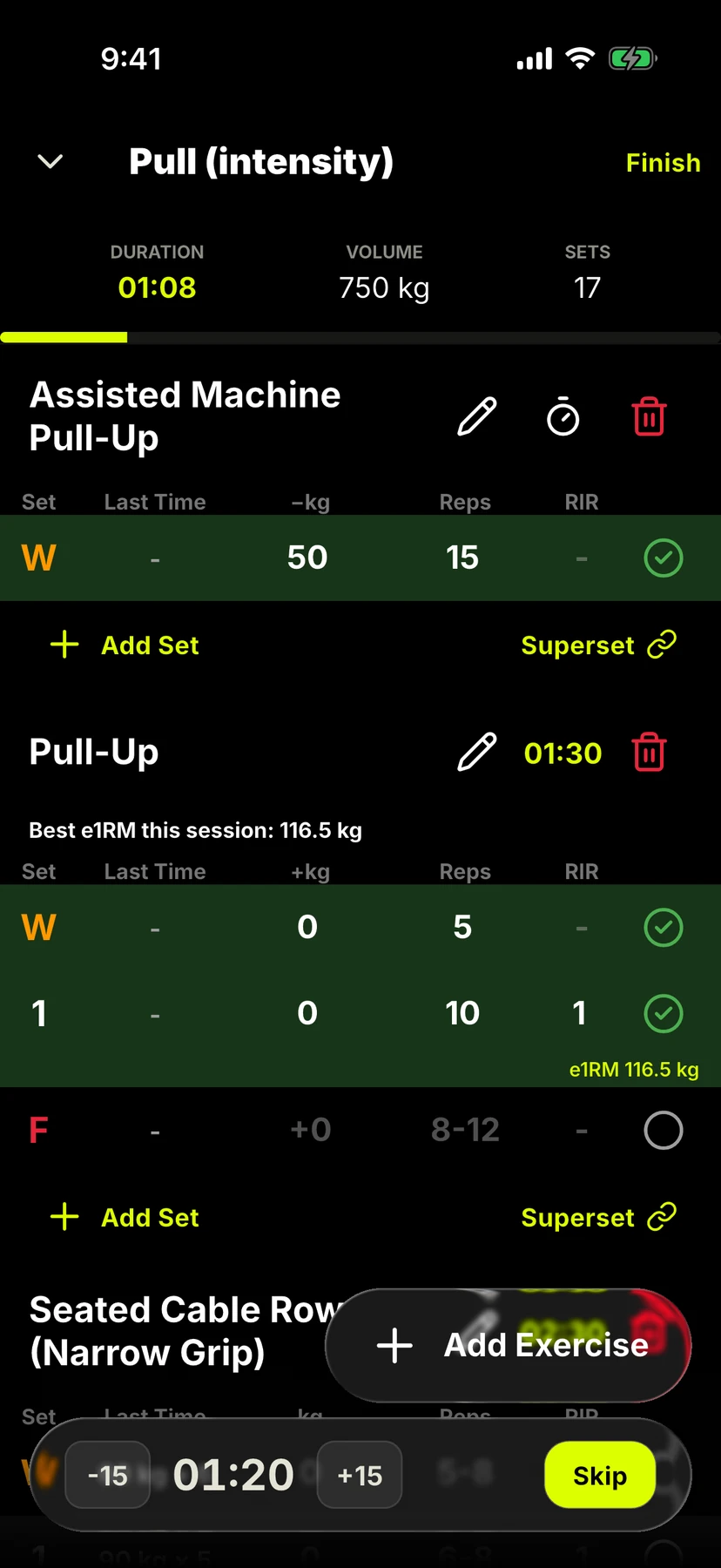
Build weekly plans from routines, add rest days, and track planned sessions. Log reps, load, RIR, supersets, and rest periods set by set.
Plans, routines, workout history Learn moreOwn every rep, meal, calorie, and recovery signal.
A private, local-first app for structured workout logging, reviewable AI meal recognition, adaptive calorie guidance, nutrition, hydration, measurements, sleep, pulse, and long-term progress without a mandatory cloud account.
Train Libre keeps the daily surface calm and the underlying data rich, so you can log precisely, review honestly, and understand progress over time.
Build weekly plans from routines, add rest days, and track planned sessions. Log reps, load, RIR, supersets, and rest periods set by set.
Plans, routines, workout history Learn moreTrack meals, calories, macros, fluids, caffeine, creatine, and custom supplements in one local diary.
Food, water, macros, dosesLog bodyweight and measurements, then read them beside nutrition trends and training consistency.
Measurements, trends, goalsUse sleep, steps, heart-rate context, and recovery views where your device data is available.
Learn more Training guidance, not diagnosisCreate local backups, import and export your data, and use one-way health export without making the cloud your source of truth.
Local-first controlCapture meals from photos or text, then review portions, food matches, warnings, and locally computed nutrition before saving.
Learn more Photo, text, grams, reviewAI capture and training or nutrition estimates solve different problems. Each has its own inputs, limits, and review flow.
Describe or photograph a meal. Your selected AI provider proposes foods and portions; Train Libre matches them to catalog foods so you can review and edit the result before saving.
Example nutrition totals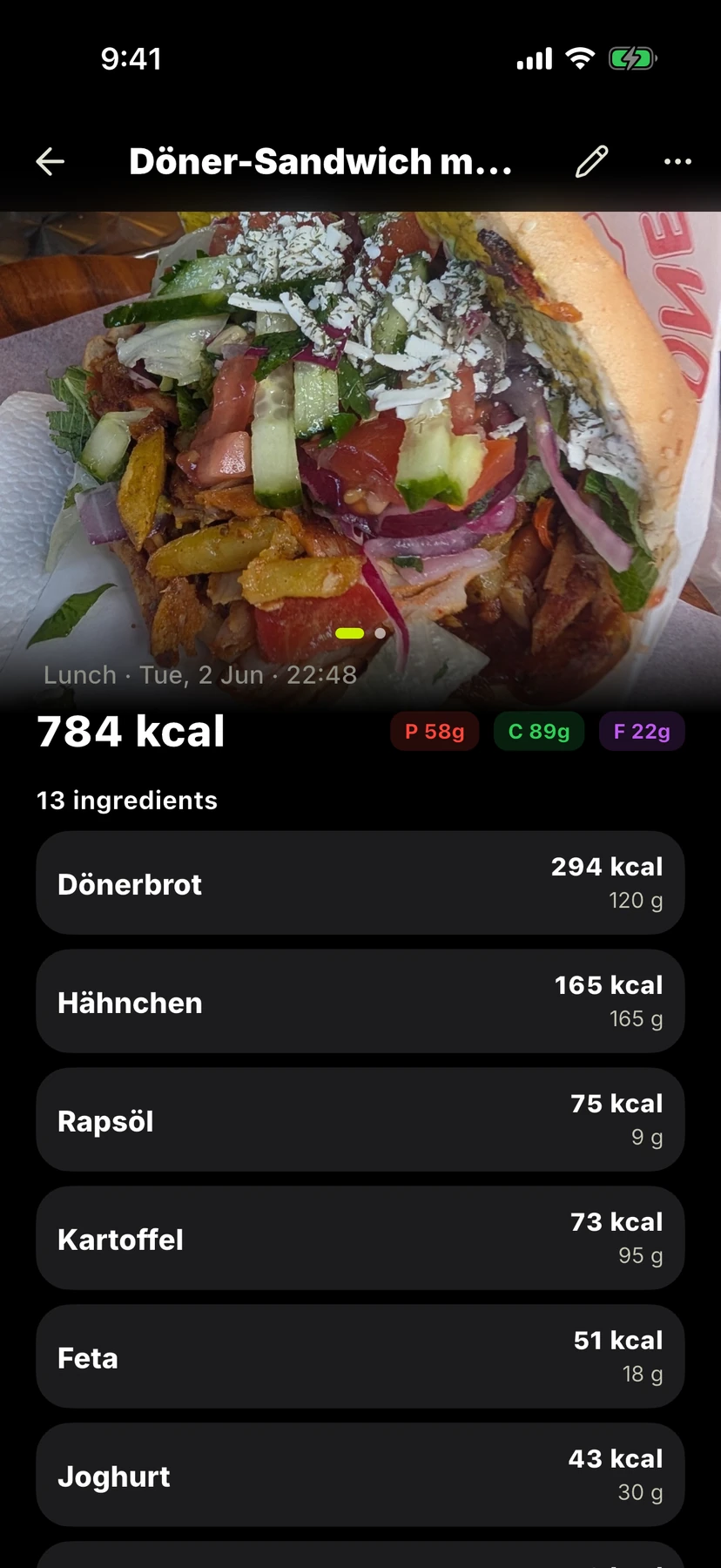
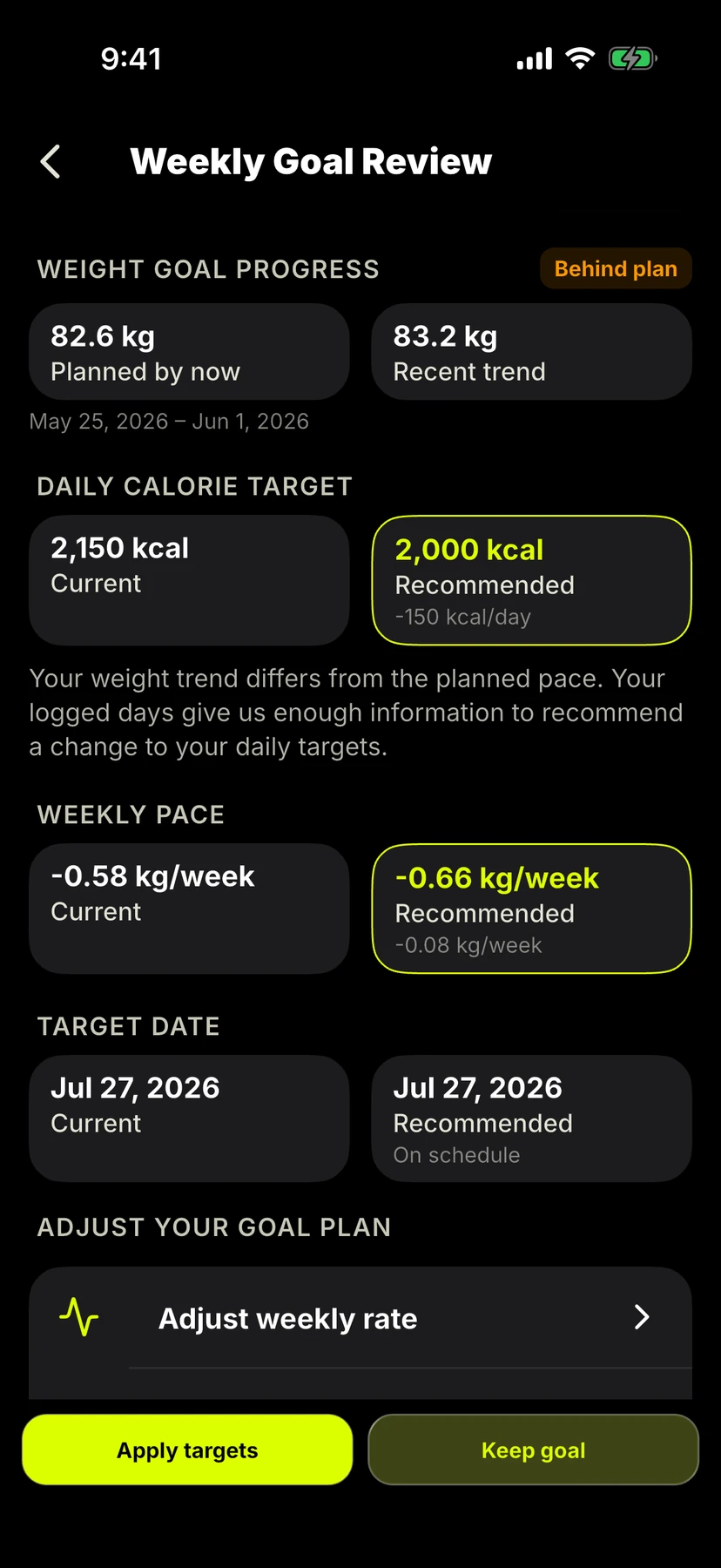
The nutrition overview keeps daily intake in view. A separate weekly review shows goal progress and lets you decide whether to apply a suggested target change.
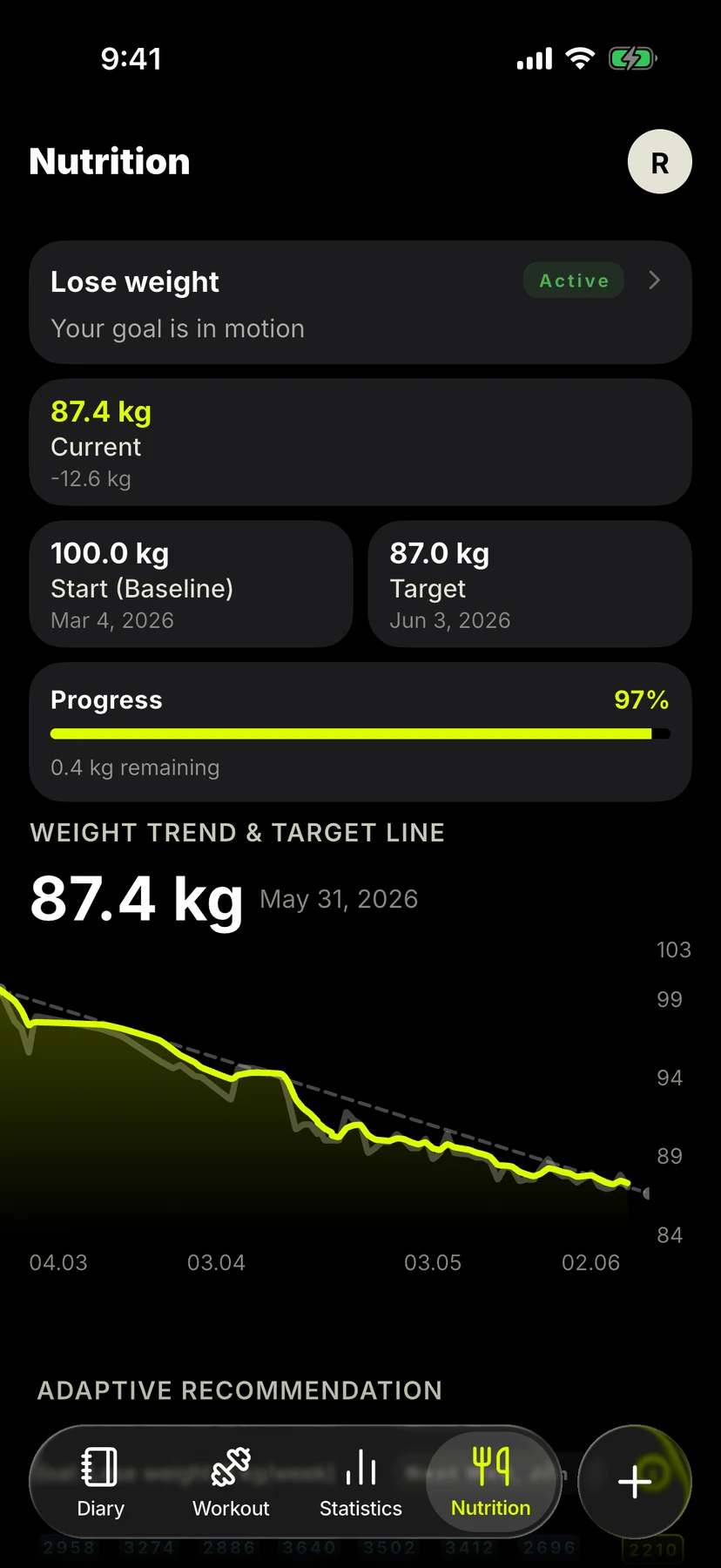
These summaries describe what each feature uses and returns. The linked articles document implementation details and limits.
AI proposes foods and portions; the app matches them to catalog foods for your review.
A recursive estimate combines logged intake with a smoothed weight trend and a profile-based starting prior.
A review compares logged progress with the active weight goal and may propose next steps.
A deterministic allocator divides a calorie target into protein, fat, and carbohydrate targets.
When enabled, the workout can suggest a starting target from the latest comparable session.
A logged load and repetition count produce a formula-based strength estimate.
Eligible completed sets contribute to a time-decaying load estimate for mapped muscles.
A 0–100 heuristic combines available sleep duration, continuity, stages, timing, and regularity.
Train Libre is offline-first. Your tracking data is handled locally by default, and there is no mandatory Train Libre cloud account. Sharing, export, health integrations, catalog refreshes, AI meal recognition, and provider calls happen only through features you choose to use.
Workouts, meals, measurements, and app state are designed around device-local storage.
Backups, imports, exports, and share sheets make data movable without turning it into a hosted account.
Optional AI and health features are separate choices, with your API key and platform permissions in your control.
Dark surfaces, bold typography, glass controls, and restrained color accents carry the same visual language from logging to AI capture to training review.
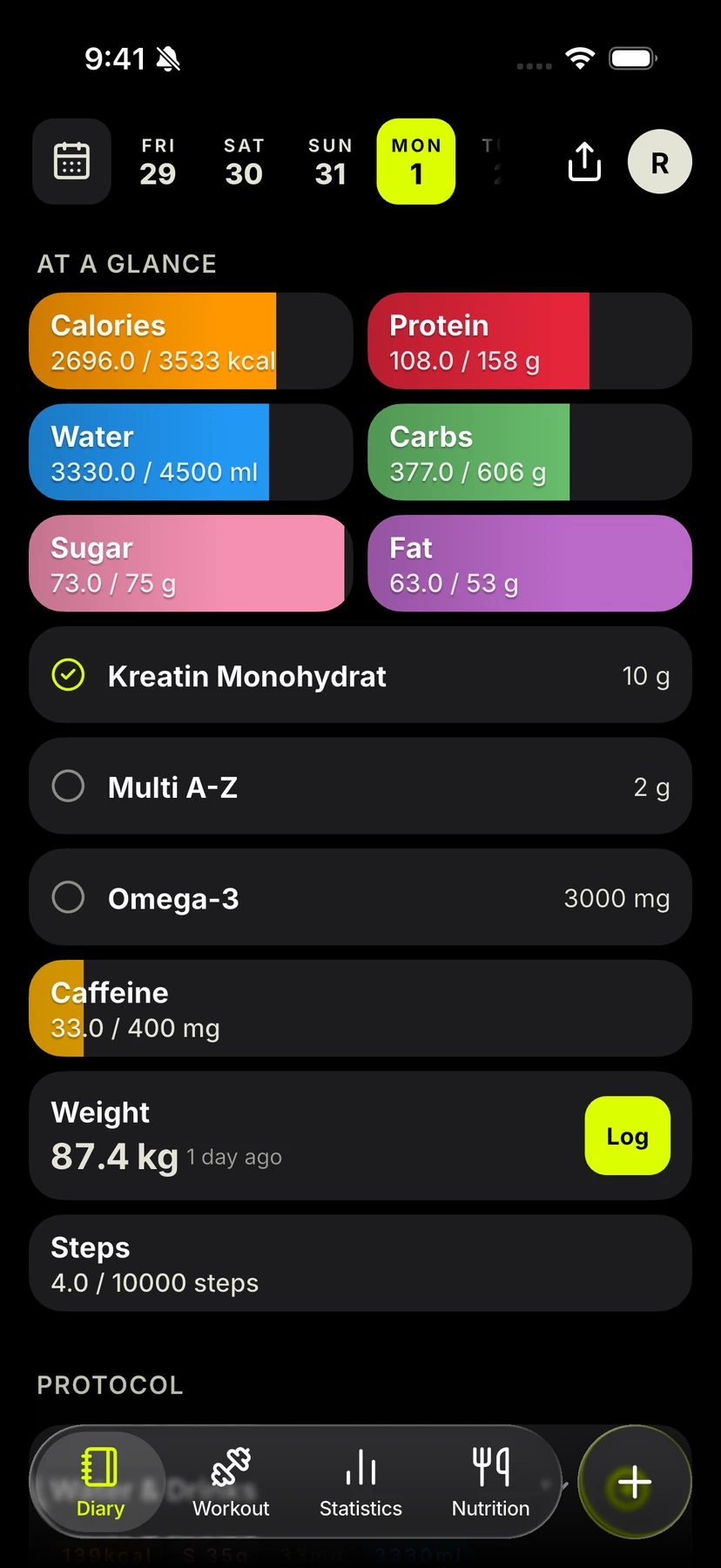
Train Libre is available on GitHub and built around understandable data flows rather than opaque tracking loops.
The project source is available on GitHub, with app behavior, catalog tooling, backup logic, and privacy boundaries visible in the repository.
Food and exercise coverage is grounded in public sources, including Open Food Facts and wger-based catalog data.
Progress, recovery, consistency, and nutrition insights are meant to be readable, practical, and grounded in the data you logged.